

Spares from machines we break
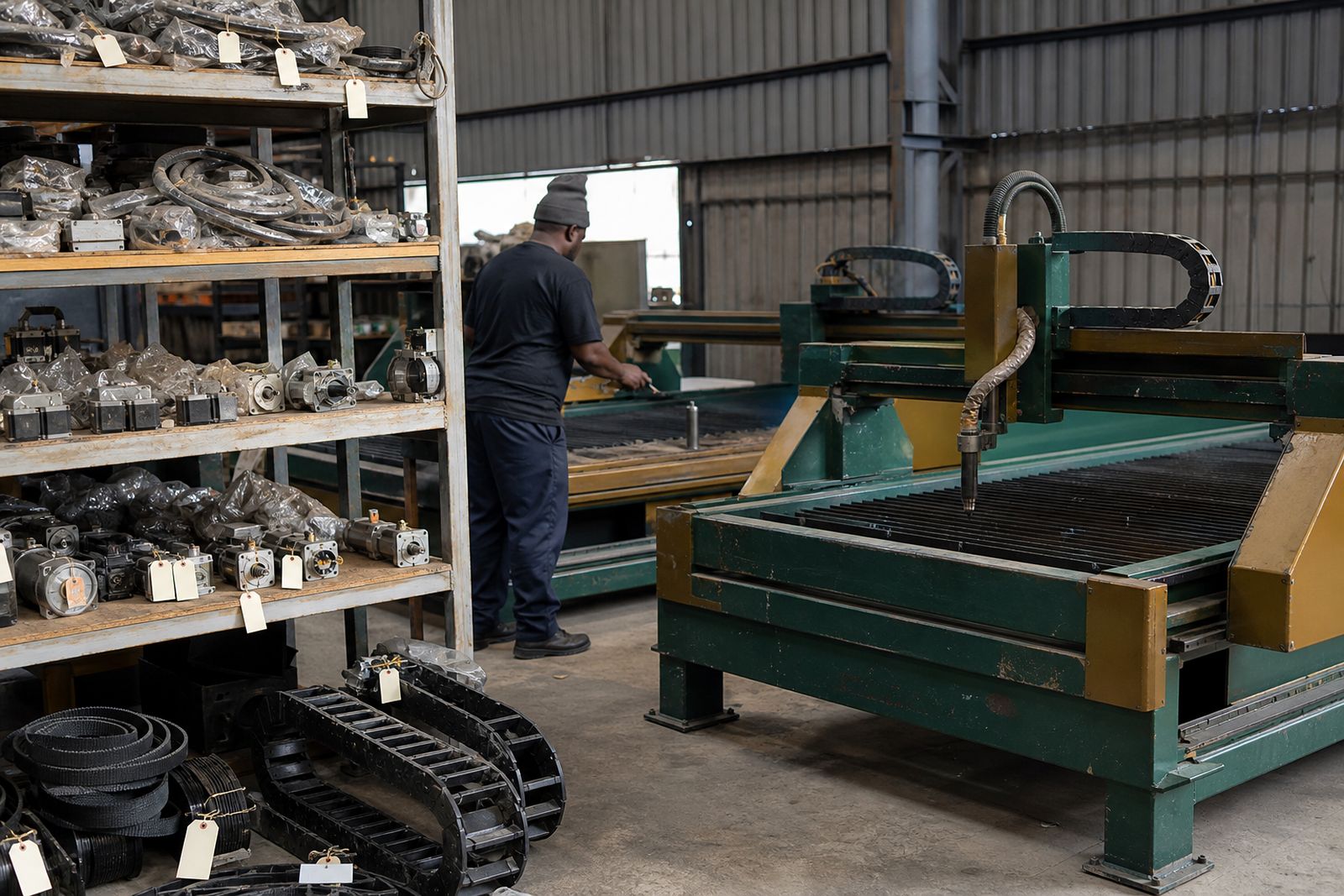
We strip selected plasma machines that are beyond economical repair and keep the usable parts aside for sale. Stock changes often, so each item is listed by what it came off, its visible condition and any basic test notes we can give.
What these spares are
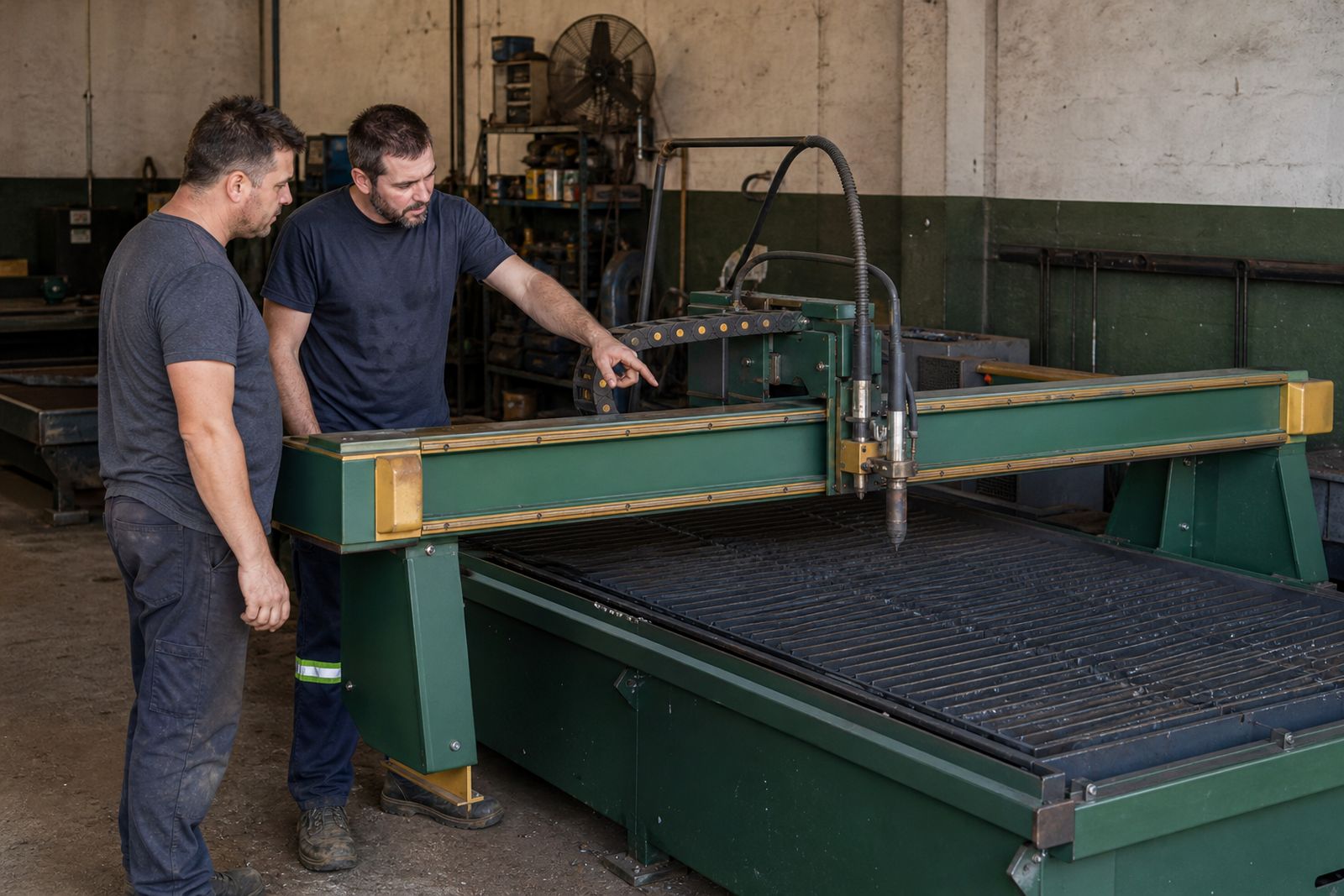
These are pre-owned parts removed from CNC plasma machines that are past saving as complete units. In most cases the frame has severe rust, crash damage, missing assemblies or electrical faults spread across too many sections to make a sensible rebuild, but some components on the same machine are still serviceable. That leaves useful stock for workshops that need a direct replacement, a stop-gap repair or parts for an older table that no longer has factory backing.
We keep the range focused on major machine items rather than general consumables. You will mainly find gantry sections, drive motors, gearboxes, linear rails, bearing blocks, torch height control assemblies, cable tracks, control cabinets, power distribution sections and wiring looms where removal was clean. Smaller brackets and covers may be available too, though not every stripped machine yields them in saleable condition.
- Gantry beams and side carriages
- Motors, drives and reduction units
- Control cabinets and operator panels
- Rails, racks, limit switches and cable carriers
- Torch lifters, height control parts and brackets
Condition, testing and working limits
Used spares are sold according to the checks completed on each part. Some electrical parts can be powered up and checked on the bench, while some mechanical parts are inspected for straightness, wear, missing teeth, cracked castings and corrosion only. Large gantry pieces are checked for obvious twist, impact damage and seized wheels or bearings. Cabinets are assessed for completeness, signs of heat damage, water ingress and unauthorised rewiring.
Working limits matter with second-hand parts. A rail may be straight enough for a repair on a lighter table but not suitable for a high-speed machine where tracking error will show up in cut quality. A motor may run smoothly under bench power yet still need fresh couplings or a matching drive setup before it can hold position properly on your machine. We will tell you what has been checked and what has not, and where a part should be treated as rebuild stock rather than fit-and-run stock.
- Bench-tested means basic powered checks were carried out where practical
- Visually inspected means condition was assessed without full live testing
- Pulled complete means the mating brackets, plugs or covers came off with the part
- As removed means cleaning or refurbishment has not been done yet
Sizes, options and typical specs
Because these items come off different tables, sizes vary from one strip-down to the next. We list the actual dimensions where they affect fitment. On gantry parts that usually means beam length, rail spacing, carriage wheel spacing, rack pitch and mounting hole centres. For cabinets it normally means enclosure size, incoming supply requirement, estimated motor count supported and whether the torch height section is present.
Most requests from Durban, Pinetown and Pietermaritzburg are for table widths around 1 500 mm to 2 000 mm and bed lengths from 3 000 mm to 6 000 mm, but we do see larger industrial tables from Richards Bay and inland workshops too. When stock lands from those machines, it can include heavier gantries, larger servo packages and taller cabinet sections. Availability is uneven, so it helps if you can work from measurements rather than machine nicknames.
- Gantry beam lengths often fall between 1 800 mm and 3 200 mm
- Linear rail lengths commonly range from 1 500 mm to 6 000 mm
- Drive motors are usually 200 W to 1.5 kW depending on axis duty
- Control cabinets may be single-phase or three-phase by original setup
- Torch lifter stroke is commonly 100 mm to 200 mm on used units
Where used spares suit, and where they do not
These parts suit workshops that already know their machine layout and need to keep an older table going without buying a full replacement. They also suit maintenance teams building one good machine from two damaged ones, or fabricators who want a cabinet shell, cable track or gantry section for a retrofit project. If your shop runs intermittent production and has time for alignment, used parts can make sense financially.
They are less suitable where a machine has to go straight into high-output work with no room for adaptation. If your control system has been heavily modified over time, a used drive or cabinet may create more fault-finding than it solves. We also do not recommend guessing on electrical swaps where encoder type, motor feedback, supply voltage or connector pinout are unknown. A cheap wrong part can waste plenty of workshop hours, and that is usually where the trouble starts.
Fitment, installation and site needs
Most buyers handle installation with their own electrician, fitter or machine technician, especially when the job is a rail swap, motor change or cabinet component replacement. Large items such as gantries and complete cabinets need proper lifting equipment, room to strip guarding, and a clean area for alignment checks before power is restored. In coastal workshops around Durban corrosion on fasteners and uneven floor levels often slow the job more than the part change itself.
If you need a complete machine moved or recommissioned, that falls under our relocation work rather than the spare itself. For part enquiries, the useful starting point is the exact failed component, where it sits on the machine and whether your team needs a like-for-like replacement or is willing to adapt brackets and wiring.
- Share clear photos of the failed part in place and removed if possible
- Measure hole centres, shaft diameter, rail width and overall length
- Note the machine bed size and axis involved
- For electrical parts, include supply voltage and connector photos
- Say whether loading help is available at your shop or branch
Care, storage and what to send with your enquiry
Used spares should not be left unwrapped on a workshop floor while other cutting and grinding carry on around them. Rails, motors and cabinets pick up dust, swarf and moisture quickly, especially near the coast. Mechanical parts are best wiped down, lightly protected against rust and stored off the slab. Cabinets should stay dry with doors shut and loose plugs taped or bagged. If you are not fitting the part straight away, label it properly with the machine position and the measurements taken at removal. It saves a lot of confusion later.
When you contact us through our contact form, send the details that let us match stock without guessing. Good information usually includes bed size, clear photos, the failed part, dimensions, any ID plate details still visible and whether your machine is still complete enough to compare against. If you need several items from one donor machine, say that up front so we can check compatibility across the set.
What our Pre-owned Plasma Machine customers say
Verified Google reviews
Questions we get asked
Do you keep stock for every plasma machine make?
Stock depends on which machines we break, so availability is uneven. Measurements, photos and cabinet details matter more than a model name on older tables.
Can I buy a complete set from one stripped machine?
Sometimes, yes. If the matching gantry, motors, drives and cabinet are still together we can check them as a set, which is often easier than mixing parts from different donors.
Do you sell new consumables with these spares?
Used machine parts are the focus here. We do not sell new consumables lines.
Also worth a look
Tell us about the job
Send sizes, materials and where you are through our contact form, and we will come back with the practical options.
Open the contact form