

Relocation and recommissioning
Moving a CNC plasma machine takes careful planning, lifting and setup. We dismantle, transport, level and recut machines for workshops in Durban, across KwaZulu-Natal and on moves linked to the rest of South Africa.
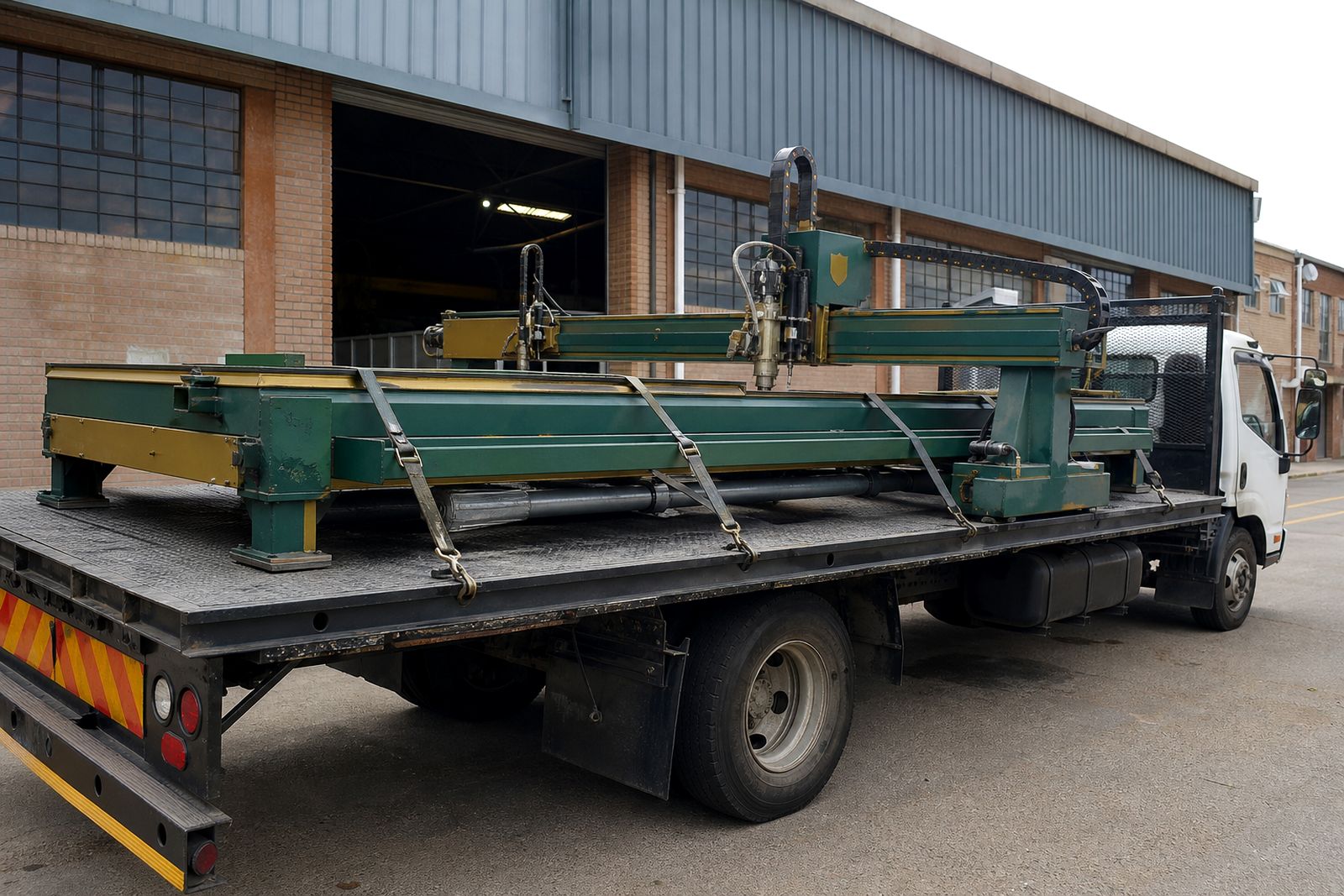
Machine relocation with transport, setup and recommissioning
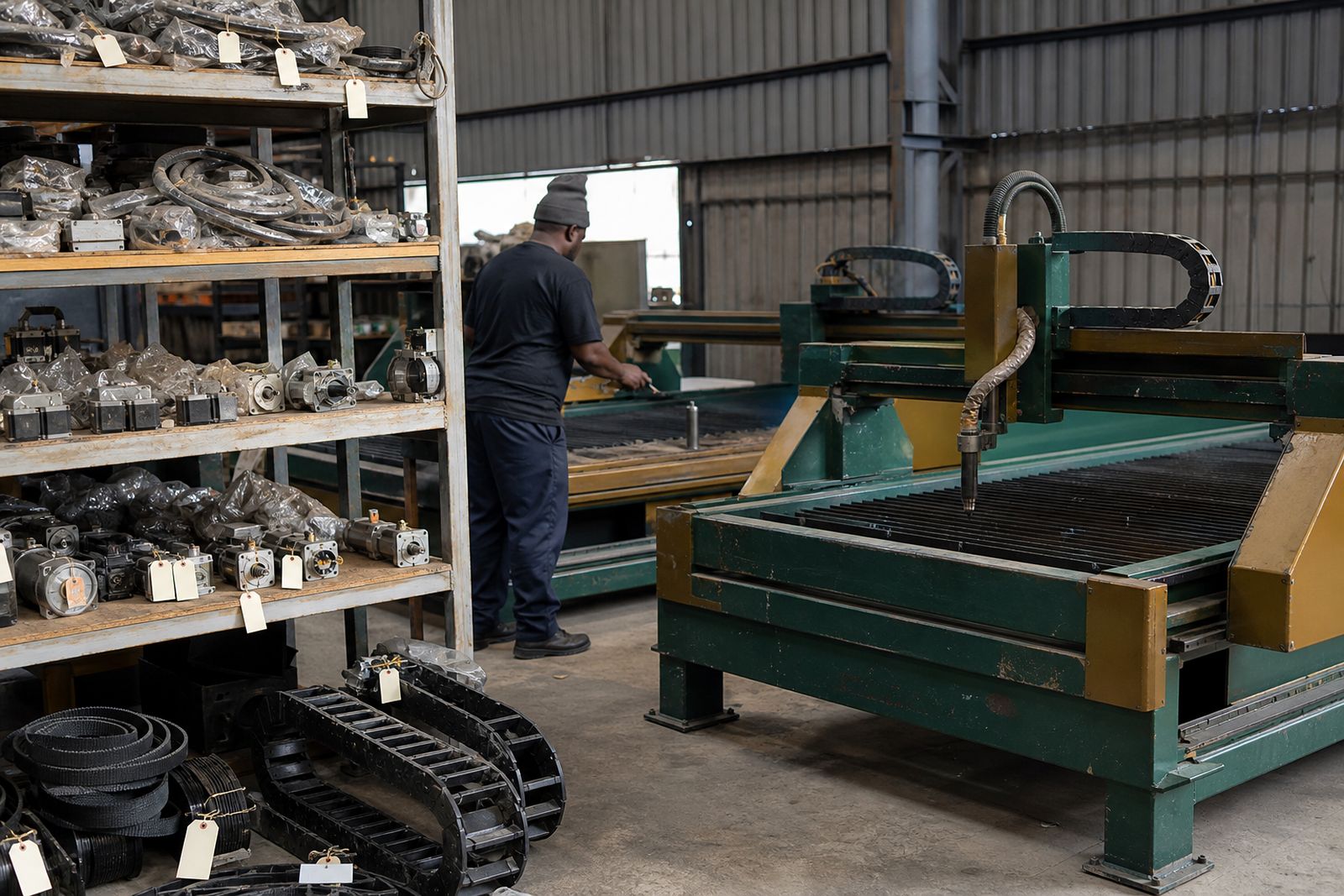
A plasma table that has been cutting well on one floor can drift out of square very easily during a move. Rails can twist, cable runs can be strained, water trays can shift and old slats often arrive at the new shop in worse shape than expected. Our relocation work is for owners who want the machine cutting properly at the next premises, with placement, setup and recommissioning included.
We handle complete moves for pre-owned, ex-demo and refurbished CNC plasma machines, whether the machine was bought from us or is already in your workshop. In Durban and wider KwaZulu-Natal this often means moving between industrial parks, smaller fabrication shops and shared factory units. For longer-distance moves tied to the rest of South Africa, we prepare the machine for line-haul transport and then recommission it at the destination floor.
What is included on a standard relocation job
Each move starts with the actual machine in front of us, because table size, gantry build, torch height setup and control cabinet layout all affect the job. We strip down only as far as the move requires, mark components for refit, and protect the parts most likely to be knocked out of alignment in transit.
- Site check of access, floor condition and machine footprint
- Dismantling of removable gantry, rails, control cabinet and cable carriers where required
- Drain-down and handling of water tray components if fitted
- Loading supervision and transport coordination
- Offloading, placement and floor levelling at the new site
- Reassembly, reconnecting and mechanical checks
- Basic cutting calibration and a fresh test-cut sample
If a machine needs replacement slats, damaged rail mounts sorted out, or missing fasteners replaced before it can cut properly, that is discussed as part of the recommissioning stage. We also deal with machines that have stood idle for a while and need extra attention before first power-up on the new floor.
How the move runs from first strip-down to recut
We prefer to map the sequence before lifting starts. That keeps forklift time, rigging time and workshop disruption under control. The first step is identifying what can travel assembled and what should be removed to prevent frame stress or impact damage. On many older tables, keeping rails and gantry protected is the difference between a clean restart and days of chasing poor cut tracking.
- Initial review of machine size, destination, loading access and services
- Marking of parts, cable routes and connection points before dismantling
- Controlled strip-down and packing of loose or sensitive assemblies
- Loading onto suitable transport with attention to frame support points
- Placement at the new shop with enough service clearance around the table
- Levelling of the frame, rail checks and gantry travel inspection
- Power-up, motion check, torch movement check and test cutting
Once the machine is back together, the job is finished after a successful test cut. Recutting after relocation matters because a table can look straight and still produce poor edge quality, inconsistent pierce position or skew across a sheet. A proper recommission includes practical checks as well as bolting parts back in place.
What your workshop should have ready
The best relocation jobs are the ones where the destination floor is ready before the truck arrives. That means clear access, enough room to place the machine without shuffling other equipment for half a day, and the correct electrical feed available near the planned control position. If extraction, compressed air or earthing requirements apply to your setup, those need to be in place before recommissioning starts.
Please make sure there is clear entry for lifting equipment, safe unloading space and a dry area for controls and loose components while the table is being assembled. If the machine is moving into a coastal workshop, we also look closely at rust on old slats, tray condition and seized adjustment points because salt air tends to show up quickly on neglected steel.
- Final machine position agreed before delivery day
- Floor cleared and reasonably level across the machine footprint
- Suitable mains supply isolated and ready for reconnection
- Forklift or crane access arranged where needed
- Consumables and plate available if a production-style test cut is required
- Operator on site for handover and basic running checks
How relocation pricing is worked out
Relocation cost depends more on the job conditions than on distance alone. A compact table moving from one easy-access unit to another in Pinetown is very different from a large bed with restricted loading, stair obstacles to the control room, a long haul to Newcastle or a recommission into a humid coastal plant near Richards Bay. We price around labour, handling equipment, transport, packing needs and the amount of calibration work needed at the other end.
Condition also matters. Machines with bent slats, seized bolts, missing guards or improvised wiring often take longer to strip and longer to put right before a test cut can be signed off. If there is a trade-in, a partial strip for resale, or spares recovery from a second machine on site, we scope that separately so the move itself stays clear and practical.
Aftercare once the machine is on the new floor
After recommissioning, we run through the machine with the workshop operator and note any issues that should be watched over the first production runs. That can include tray settling, fastener rechecks, rail cleanliness, cable support movement and cut quality across full travel. A machine that has just been moved sometimes needs a small follow-up adjustment after the first sheets have gone through, especially if the floor settles under load points.
We can also assist where the move leads into a broader decision about the machine itself. Some owners relocate and keep cutting for years. Others use the move to assess whether the table should be traded in, broken for parts, or replaced with a different pre-owned unit from our stock. For any of those routes, our contact form is the place to set out the machine size, current town and destination.
What our Pre-owned Plasma Machine customers say
Verified Google reviews
Questions we get asked
Do you move machines not bought from CNC Plasma Machines?
We handle relocations for machines already in service at other workshops, provided the move can be scoped properly from the machine condition and site access details.
Can you move a machine between provinces?
We prepare the machine for transport, arrange the strip-down and then recommission it at the destination workshop, whether the move starts in KwaZulu-Natal or links to another part of South Africa.
Will the machine be cutting before the job is signed off?
That is the aim of recommissioning. Once the machine is reassembled and levelled, we run checks and produce a fresh test cut so the table is not left as a partly assembled delivery item.
Also worth a look
Tell us about the job
Send sizes, materials and where you are through our contact form, and we will come back with the practical options.
Open the contact form