

Trade-ins
If your current CNC plasma machine still has value, we can assess it and set that amount against a machine you want from our stock. We handle trade-ins from Durban workshops and from sites across KwaZulu-Natal, with relocation arranged where needed.
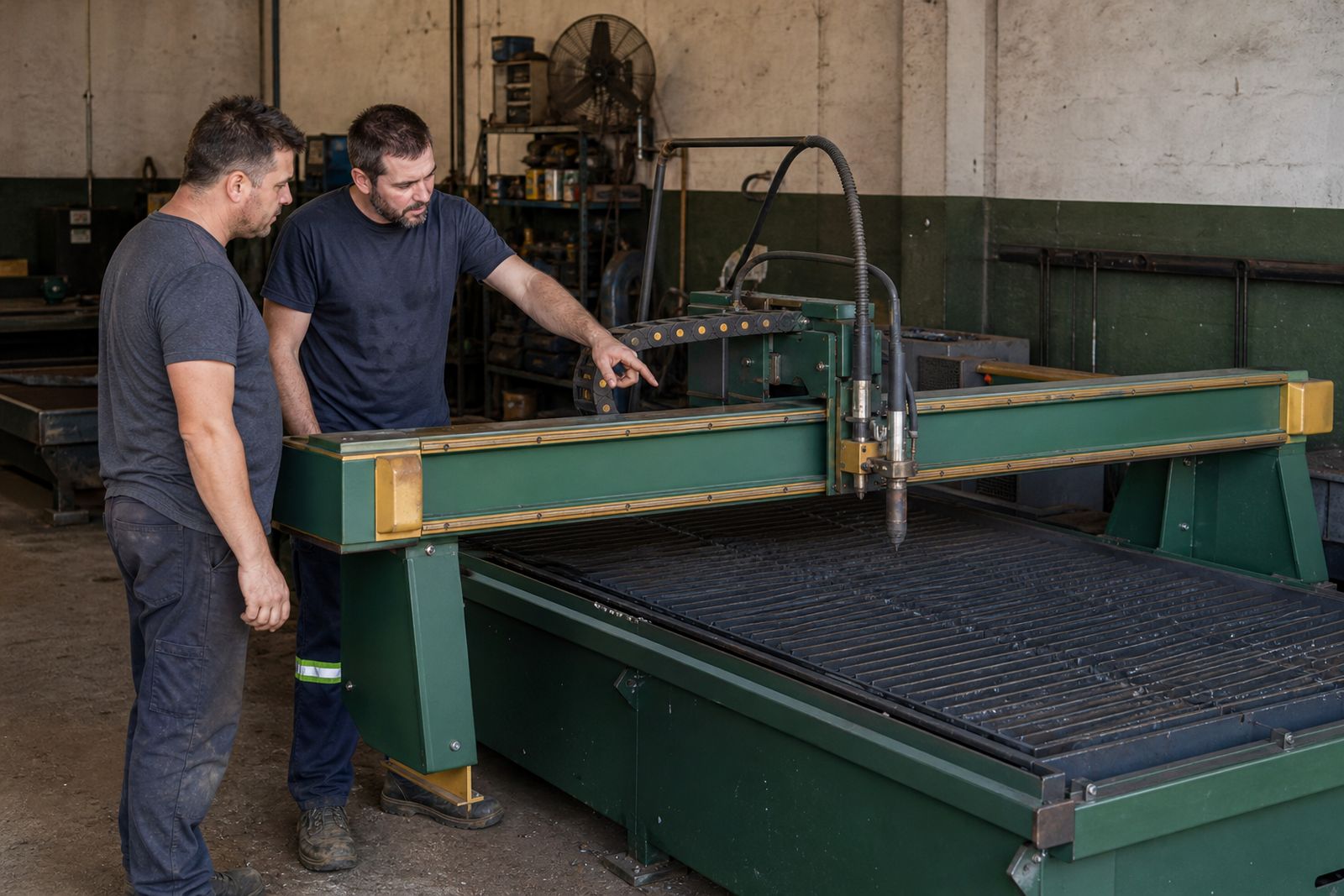
How we assess a trade-in
A trade-in starts with the machine as it stands in your workshop, with a valuation based on its actual condition and equipment. We look at the table size, rail condition, drive system, torch height control, power source size, control hardware, wiring condition and how complete the machine is. Service history helps, but the actual running condition matters more than promises on paper.
Machines from coastal shops often show surface corrosion on frames, rails and electrical enclosures, while inland units can arrive dusty, dry and worn on bearings or cable tracks. Both can still hold value. Our valuation is based on whether the machine can be cleaned, repaired, recommissioned, broken for useful spares, or sold in lower grade condition.
- Cutting width and length in millimetres or metres.
- Type of motion system, including rack and pinion, linear guide or older wheel systems.
- Power source rating in amps, phase requirement and general running condition.
- Controller status, software access and whether screens, drives and limit switches still work.
- Torch lifter, slat bed, fume extraction connections and cable condition.
- Any missing parts such as motors, THC units, nesting PC, remote pendants or covers.
What to send before we price it
Clear information saves wasted trips and avoids a value being pitched too high or too low. Before we put forward a trade-in allowance, we need enough detail to place the machine into a realistic condition band. A workshop manager usually knows most of this already, even if the machine has been standing for a while.
Please send the details through our contact form together with recent photos and a short note on the fault history. If the machine still runs, a basic video of homing, jogging and one cut is useful. If it no longer cuts, say what failed last and whether anything has been removed.
- Overall table size and effective cutting area.
- Age if known, though condition matters more than age.
- Photos of the full machine, rails, gantry, control box and power source.
- Video of startup, axis travel and a test cut where possible.
- Site address, loading access and whether forklift help is available.
- Whether you want straight sale, trade-in against stock, or trade-in with relocation included.
How the allowance is worked into your next machine
The trade-in value is an allowance based on the recoverable worth of your machine once transport, strip-down, cleaning, repair parts, workshop time and resale risk are considered. A running unit with clean rails and a sound power source will usually carry a better allowance than a stripped frame with dead drives and missing electronics.
When you choose one of our pre-owned, ex-demo or refurbished machines, we set out the machine price and the trade-in allowance separately so you can see the balance clearly. If relocation is part of the deal, that cost is also shown separately because distance, access and rigging requirements vary a lot between Durban, Pinetown, Pietermaritzburg, Richards Bay and Newcastle. For moves outside KwaZulu-Natal, route length and offloading conditions can shift the numbers quite a bit.
In general terms, pricing turns on four things: resale potential, parts value, workshop labour required and transport complexity. A machine that can be recommissioned with ordinary service work is worth more to us than one suitable only for breaking. That sounds obvious but it matters when clients compare two tables that look similar from ten metres away.
Step by step from inspection to swop-out
Once we have enough information, we either give a provisional allowance from the material sent or arrange an on-site inspection if the machine is large, incomplete or difficult to judge remotely. If you are trading against a stock machine, we also confirm whether removal and delivery happen on the same trip or in separate stages.
- Review of photos, video, dimensions and known faults.
- Provisional valuation range or site inspection planning.
- Selection of the replacement machine from available stock.
- Written breakdown showing machine price, trade-in allowance and relocation costs if needed.
- Collection and loading plan for the outgoing machine.
- Delivery, positioning and recommissioning of the incoming machine where included.
Some workshops need the old machine left in place until the replacement is on site. Others want the floor cleared first for electrical work or extraction changes. We plan around access, lifting points, door heights and whether the site has crane service, forklift capacity or only pallet equipment. On older factory sites this part can get awkward fast, so accurate site photos help a lot.
Preparing the machine and the workshop
A cleaner handover makes the numbers easier for everyone. Please remove loose scrap, uncut plate, stored boxes and anything tied onto the frame that is not part of the machine. We also need ordinary access to the controller, power source, cable routes and bed area so the unit can be checked properly and disconnected safely.
If the table is being collected, the client must make sure there is legal and practical access for loading equipment. That includes clear gangways, open roller doors, working yard space and notice of any site restrictions. If municipal or park rules apply to heavy vehicle access, let us know early. Machines tucked into corners can still be moved, but extra labour or lifting gear may change the final figure a bit.
Where recommissioning is part of the swop, the incoming machine area should be level, measured and ready for placement. Power supply details matter here: confirm voltage, phase, breaker size and earthing condition before delivery day, before the machine is hanging on slings.
After handover and ongoing support
After the trade-in is completed, support depends on the machine you take from stock and the condition category it was sold in. Pre-owned, ex-demo and refurbished machines are sold with an inspection report, a test-cut sample and warranty cover as set out on the relevant machine listing or on our inspection and warranty page. Sold-as-seen units are handled differently and are priced on that basis.
We can also help after installation with relocation adjustments, levelling checks, cable routing and practical advice around older plasma tables. If a machine later becomes uneconomical to repair, we may still be able to buy back certain assemblies or supply used spares from machines we break. That helps workshops keep older equipment earning a bit longer rather than stripping it in a rush.
We consider neat late-model tables, incomplete units, idle machines and workshop closures too, provided the information is honest and the site details are workable.
What our Pre-owned Plasma Machine customers say
Verified Google reviews
Questions we get asked
Do you take non-running plasma machines as trade-ins?
We do, if the machine still has recoverable value as a repair candidate or for parts. Missing items, seized motion and electrical faults reduce the allowance, but a dead machine is not automatically worthless.
Can a trade-in be done outside KwaZulu-Natal?
We are based in Durban and handle many machines in KwaZulu-Natal, and we also relocate machines to and from the rest of South Africa where access and transport planning make sense.
Will you trade against any machine in stock?
In most cases, provided the figures line up and the machine you want has not been allocated elsewhere. The allowance is shown separately from the stock machine price so the balance stays clear.
Also worth a look
Tell us about the job
Send sizes, materials and where you are through our contact form, and we will come back with the practical options.
Open the contact form