

Buying a used plasma machine
A used plasma machine can save serious money when the frame is straight, the motion is clean and the electrics have been looked after. The key checks before you commit include the rails, the cabinet and the test cut.
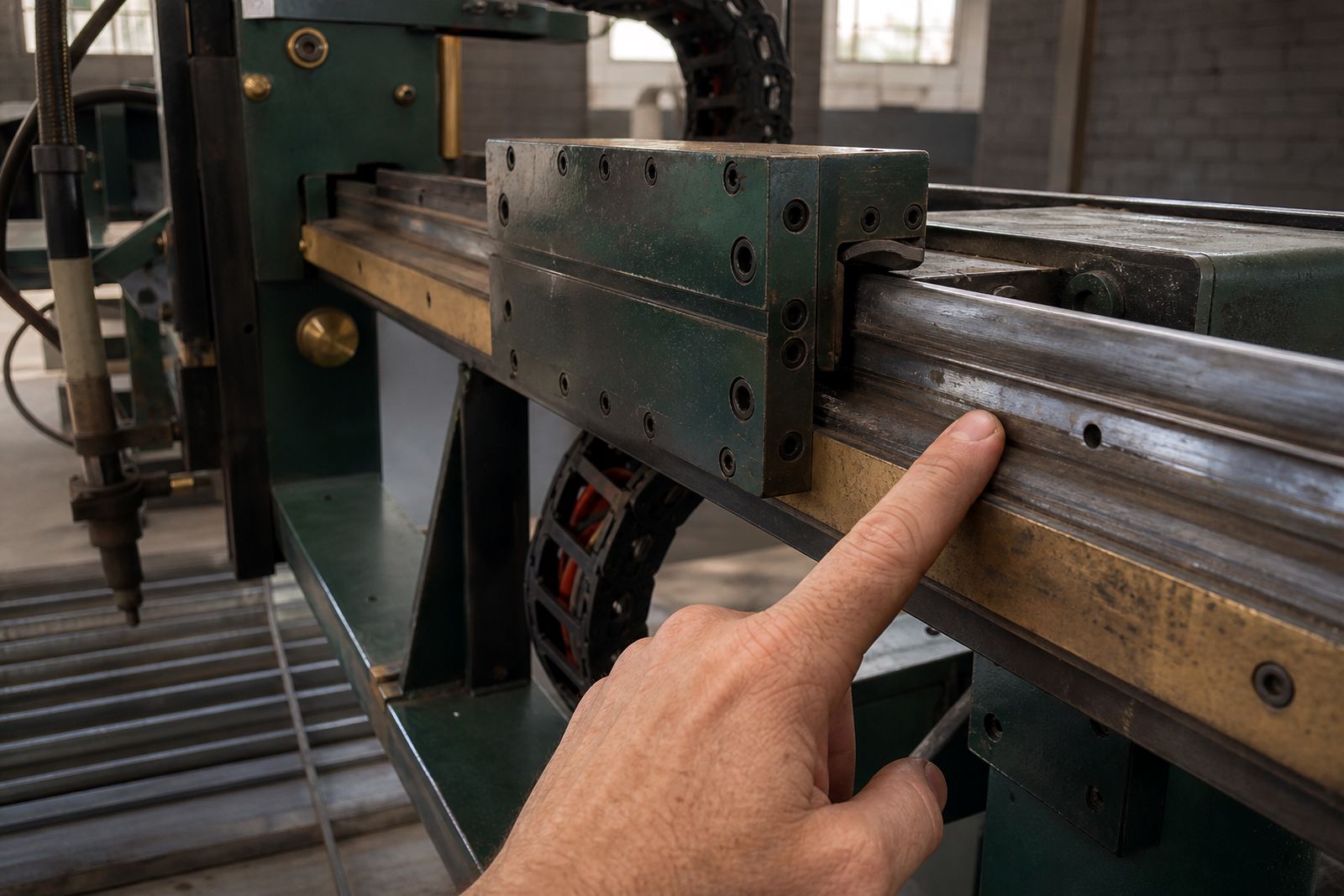
Start with the frame and rails
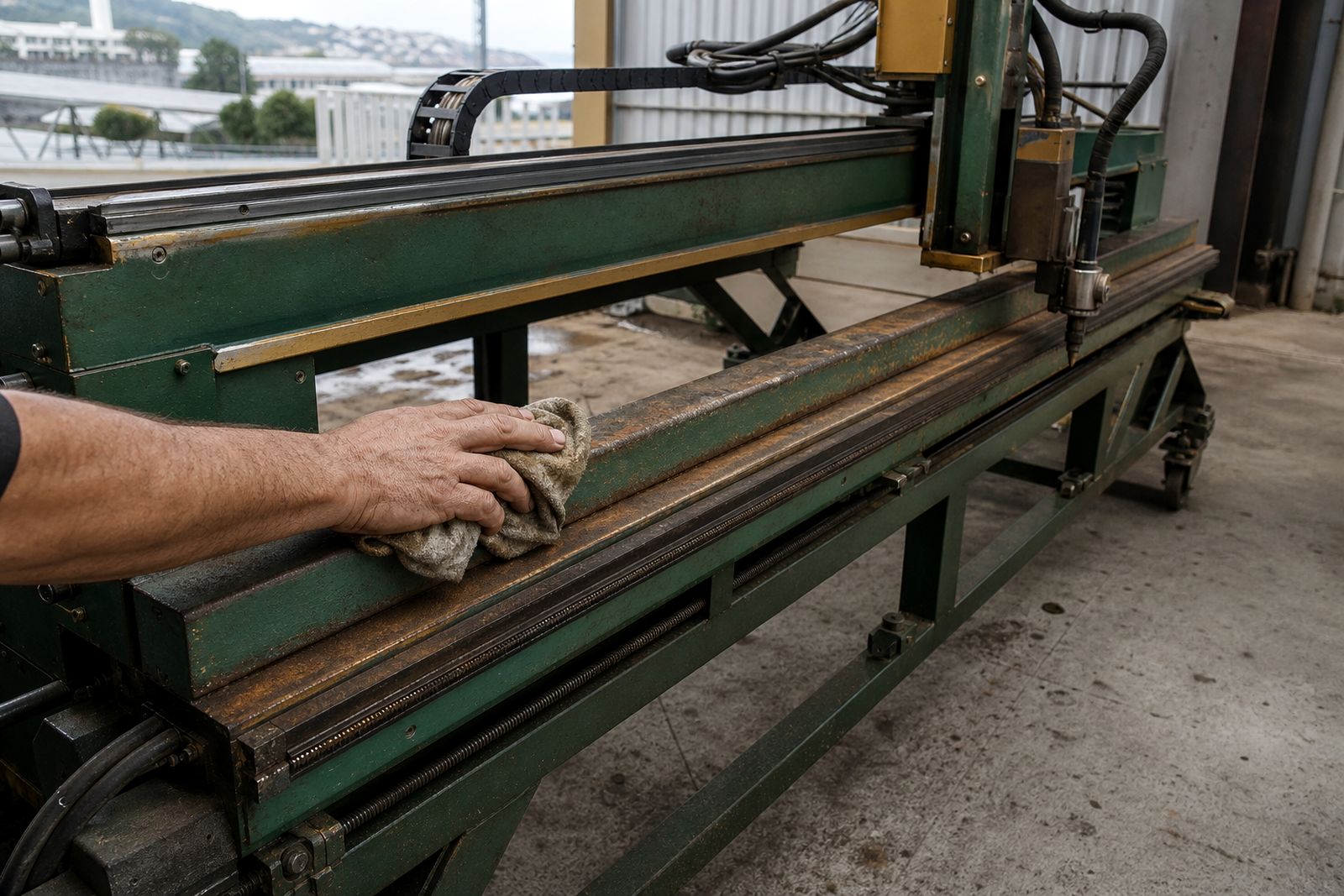
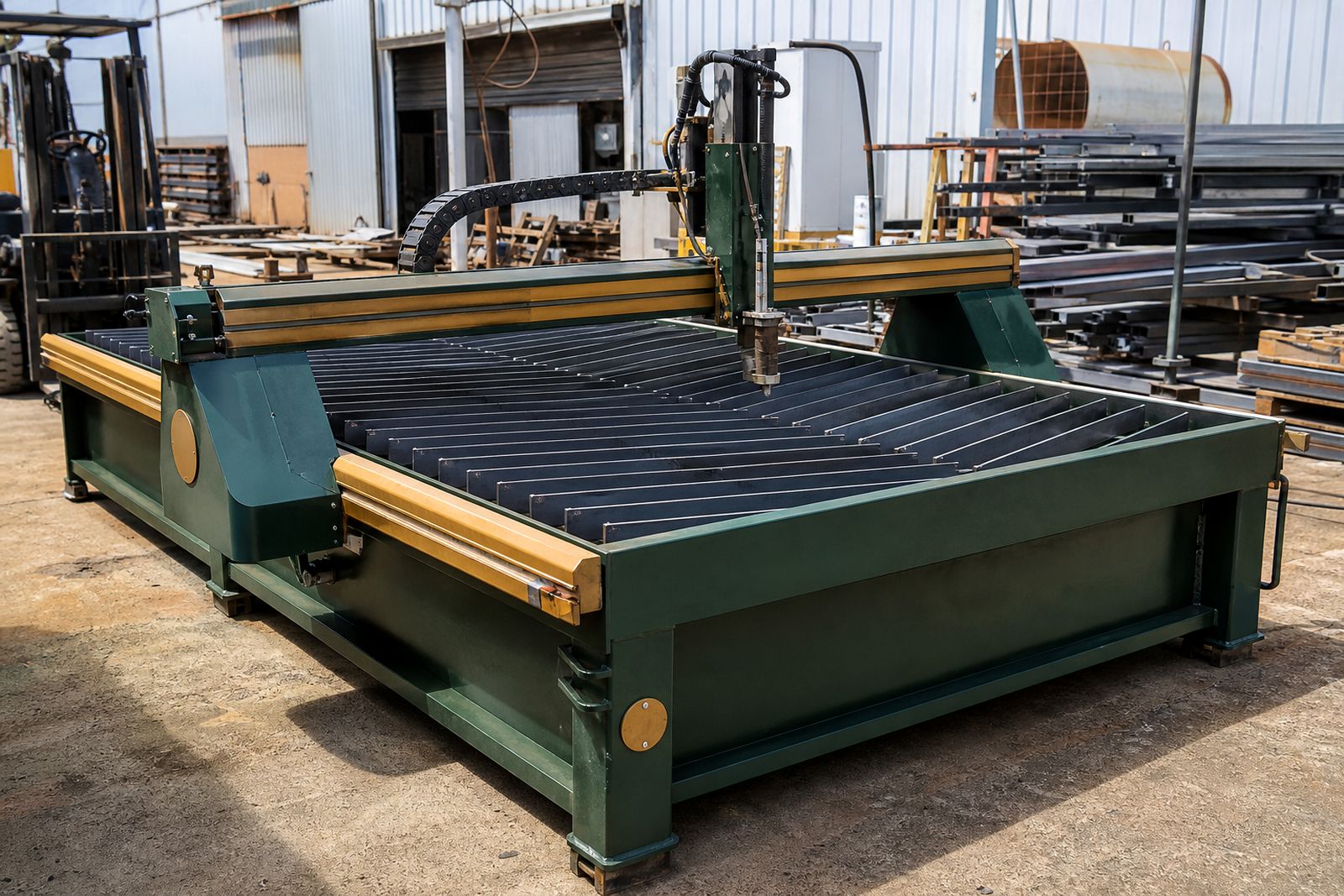
The first look should be at the table, gantry and rail line before anyone starts talking about software or extras. If the base is twisted, the rail faces are worn or the gantry has been knocked out of square, the machine can turn into a long repair list. On older tables near the coast, surface rust is common and not always a problem. Deep pitting on rail contact areas is different because it affects motion and cut quality.
Stand at each end of the machine and sight down the rails. Check whether both sides sit true and whether the gantry tracks evenly without a visible skew. Push for honest information on previous use. A machine that spent years cutting light gauge sheet usually tells a different story to one that ran thick plate in a fabrication shop every day.
- Look for dents, weld repairs and bent cross members under the bed.
- Check rail faces for pitting, chipping and bright wear patches that suggest uneven loading.
- Move the gantry through the full travel and listen for tight spots or rough sections.
- Inspect bearings or wheel assemblies for side play.
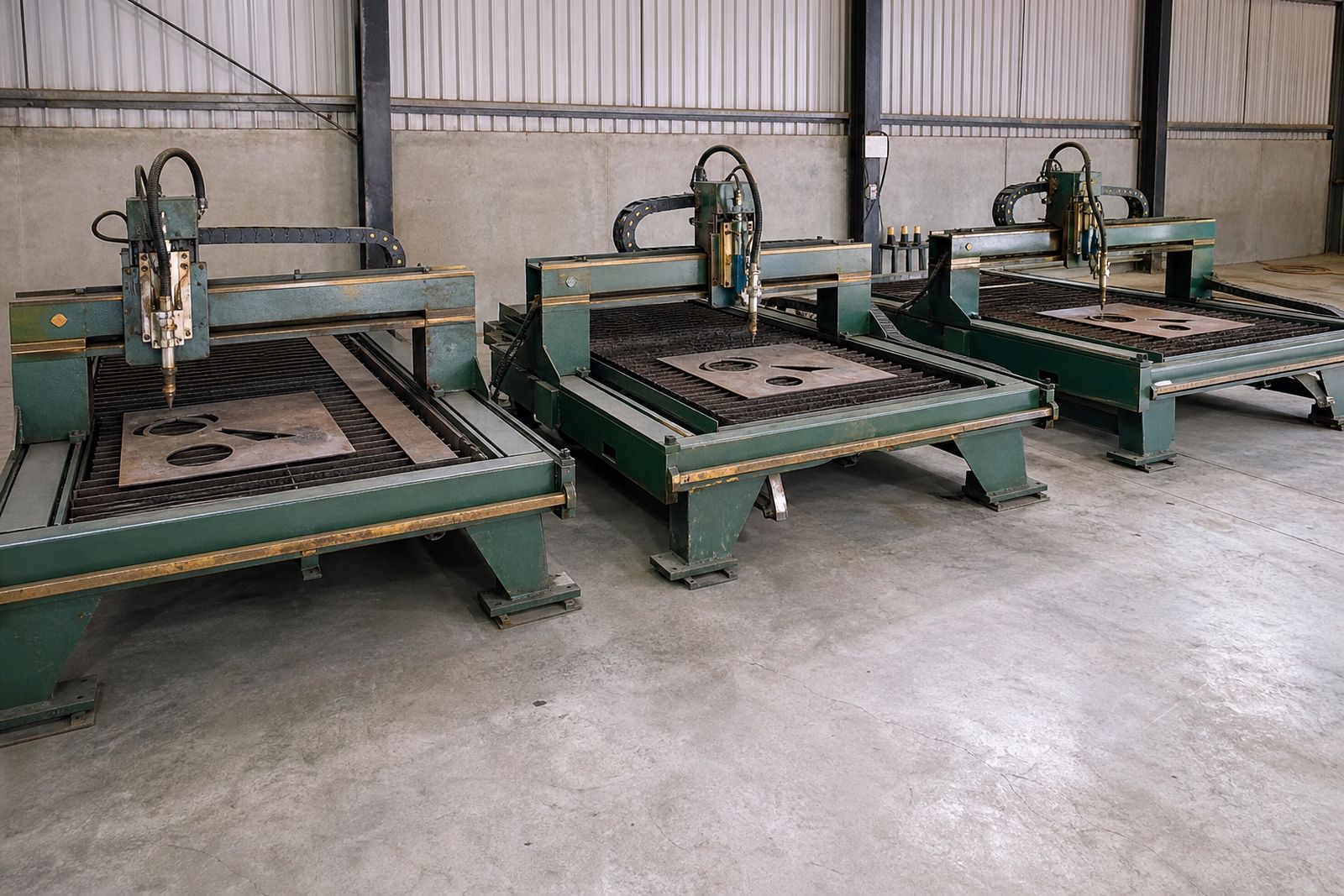
- Confirm whether slats, water tray sections or downdraft parts are included.
Open the cabinet and read the condition properly
The cabinet tells you how the machine was treated. Neat cable runs, labelled terminals and clean filters usually point to sensible maintenance. A cabinet full of grinding dust, loose wire offcuts and oil residue is a warning sign. In Durban humidity, corrosion can creep into terminals, contactors and earthing points, so the inspection should cover each area carefully.
Ask for the machine to be powered up so you can see fans, drives and the control hardware running together. Doors that do not seal, missing gland plates or obvious moisture marks matter, especially if the machine stood in a workshop near an open roller shutter for years. On pre-owned equipment, a tidy cabinet often saves money later, and a messy one tends to keep charging you.
- Check for rust on hinges, terminals and earth studs.
- Look for burnt insulation, darkened contactor faces and non-matching replacement parts.
- Inspect cable chains and flexible conduits for cracking or crushed sections.
- Make sure limit switch wiring and sensor leads are secured properly.
- Ask whether any drives, controller boards or torch height parts were replaced during refurbishment.
Watch a full movement check
A machine ready for production should handle homing, jogging, rapid moves and a slow controlled pass across the table properly. The important part is consistency. Jerky motion, hesitation at one corner or a gantry that sounds different halfway down the rail often points to wear, alignment trouble or neglected setup.
If the table has torch height control, watch how it reacts during a sample cut. The torch should not hunt up and down wildly or lag so badly that cut height is obviously wrong. Also check lead screw or rack condition where fitted, and ask whether pinions, gearboxes or couplings have been changed. Small mechanical faults can become expensive once transport and installation are added. That catches buyers off guard.
For workshops in Pietermaritzburg, Newcastle or Richards Bay, it also helps to think past the demo. Ask what will be needed when the machine lands on your floor, including bed levelling, compressed air quality and incoming power at your branch or shop.
Treat the cut sample as evidence
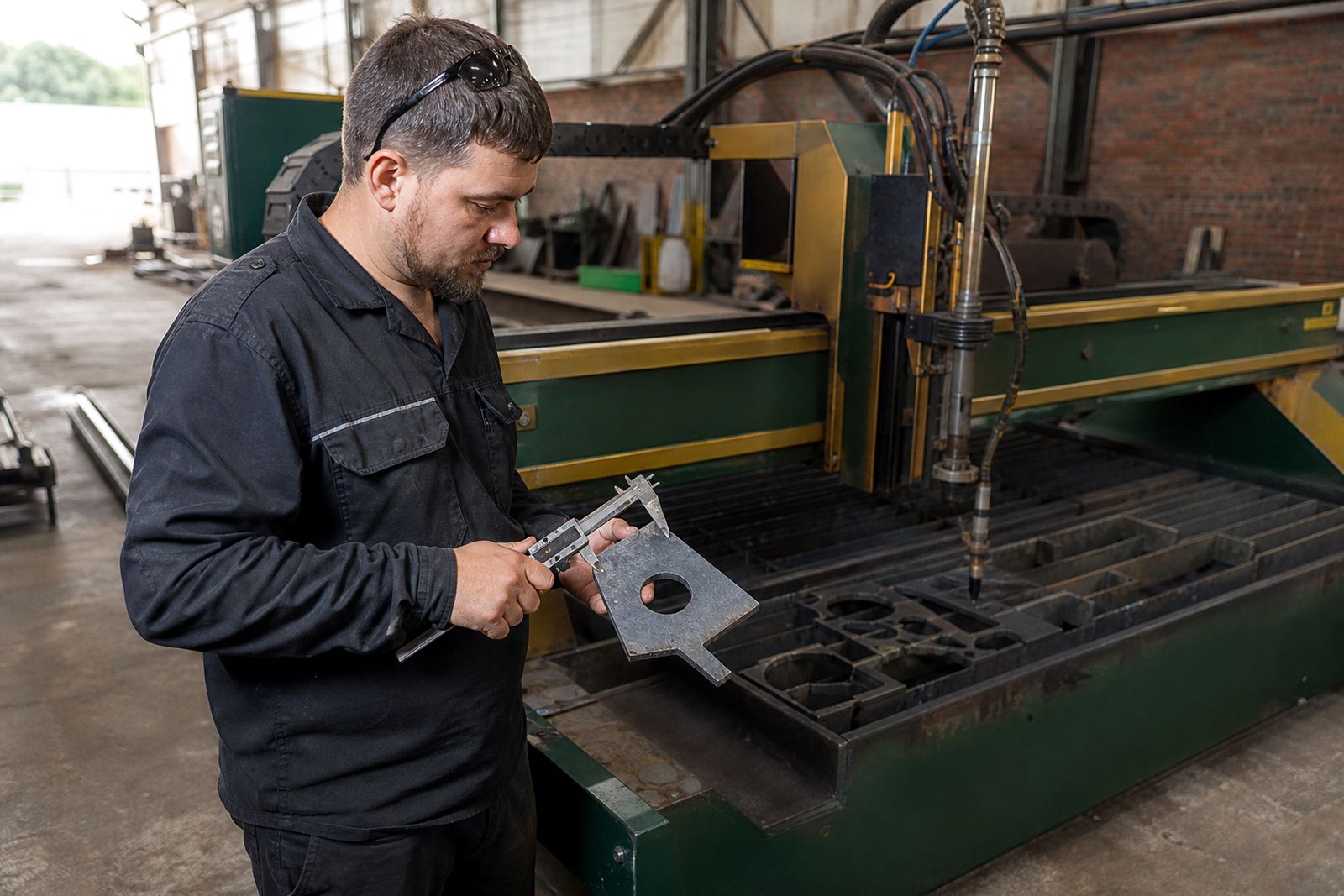
The test cut is where the sales talk should stop and the machine should prove itself. Ask for a sample in material thickness close to your normal work, with material that reflects the machine's typical use. Take the sample in hand and check edge angle, dross, pierce quality and hole roundness. If your work includes base plates, brackets or gussets, ask for shapes that resemble those parts.
A useful sample includes straight cuts, internal corners and a few holes of different diameters. Tiny circles often expose backlash, poor tuning or weak motion parts clearly. Marking, start points and pierce locations should also be sensible and repeatable.
- Check whether the edge is square enough for your fabrication tolerance.
- Look for heavy dross that would add grinding time on every part.
- Inspect hole shape for ovality or chatter marks.
- Compare repeated parts and check for consistent quality across the set.
- Ask for the sample to be linked to the inspection report so there is a clear record.
Match the machine to your workshop, not to the sticker size
Bed size on paper matters alongside access, loading space and safe reach around the machine. You need enough room around the table for loading plate, removing scrap and reaching the cabinet safely. A 1 500 x 3 000 mm table may fit through the door, but still be awkward in a narrow shop where a forklift cannot turn cleanly. Also consider sheet weight, floor condition and access for offloading.
Check your electrical supply carefully. Plasma equipment and motion systems depend on stable power and sound earthing, and neglected workshop wiring can make fault-finding difficult from day one. Compressed air quality matters just as much. Wet air and dirty lines shorten component life and spoil cut quality, even on a machine that tested well before dispatch.
If relocation is part of the deal, confirm what travels with the machine: control pendant, extraction sections, slats, cable supports, manuals and any loose covers. Missing small items are common on used equipment and they are seldom noticed until recommissioning starts.
Questions worth asking before the sale is agreed
A proper used machine sale should leave less guesswork. Ask for the inspection report, the test-cut sample and the warranty details. Find out what was repaired, what remains used but serviceable, and which parts are regarded as wear items. That distinction matters because it affects your first maintenance budget.
Trade-ins and broken machines can be valuable sources of original assemblies, so it is worth asking whether matching spares are available from dismantled units. For buyers outside Durban, transport method and recommissioning scope are just as important as the machine itself. A fair price on the floor can become expensive if alignment, lifting and travel were never discussed.
- Has the machine been sold as refurbished, ex-demo or sold-as-seen?
- What work was carried out before listing?
- Which items are covered by warranty and which are normal wear parts?
- Is there an inspection report tied to the serial number or control record?
- Can relocation and recommissioning be included for your site in KwaZulu-Natal or elsewhere in South Africa?
If you are comparing two machines, keep the notes practical: rail condition, cabinet condition, sample quality, included parts and site fit. That usually gives a clearer answer than chasing the lowest figure on the page.
Questions we get asked
Should I avoid a coastal machine because of rust?
Light surface rust on non-critical areas is common near the coast. The real concern is pitting on rails, corrosion inside the cabinet, and seized or contaminated motion parts.
Is an inspection report more useful than a quick demo?
An inspection report is usually more useful because it gives a written record of condition, checks performed and any noted faults. A brief demo can hide detail if you only see one short cut.
Can a used machine be moved to another town without losing accuracy?
It can be moved without losing accuracy if it is dismantled, transported and recommissioned properly. Rail alignment, gantry squareness, bed levelling and electrical checks should all be part of the move.
Also worth a look
Tell us about the job
Send sizes, materials and where you are through our contact form, and we will come back with the practical options.
Open the contact form