

Coastal air and old tables
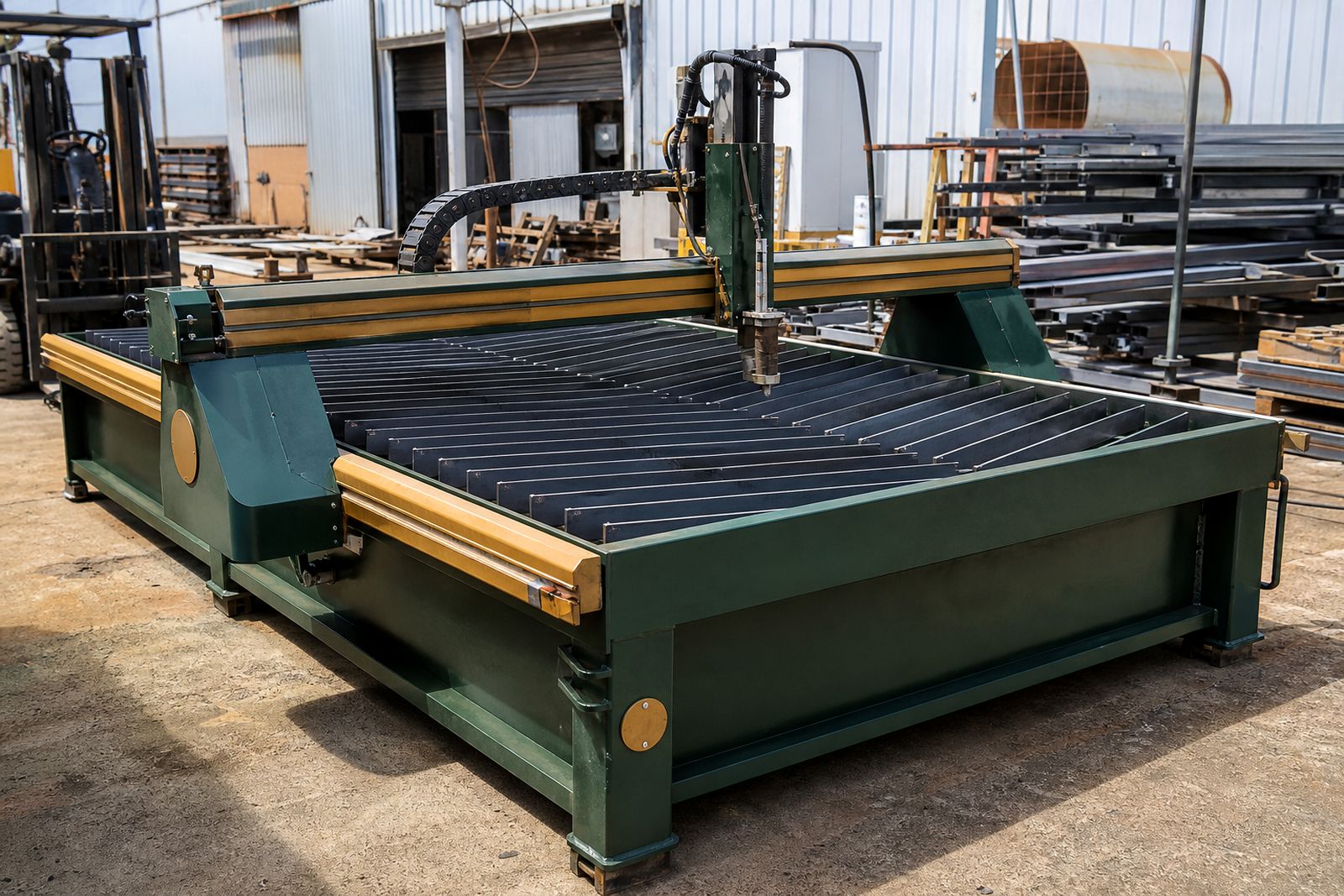
Durban air is hard on older plasma tables, especially machines that have stood near open roller doors or close to the coast. Salt, moisture and neglect affect rails, frames and electronics, and the damage needs proper assessment before a machine goes back into work.
Salt in the air reaches further than most workshops expect
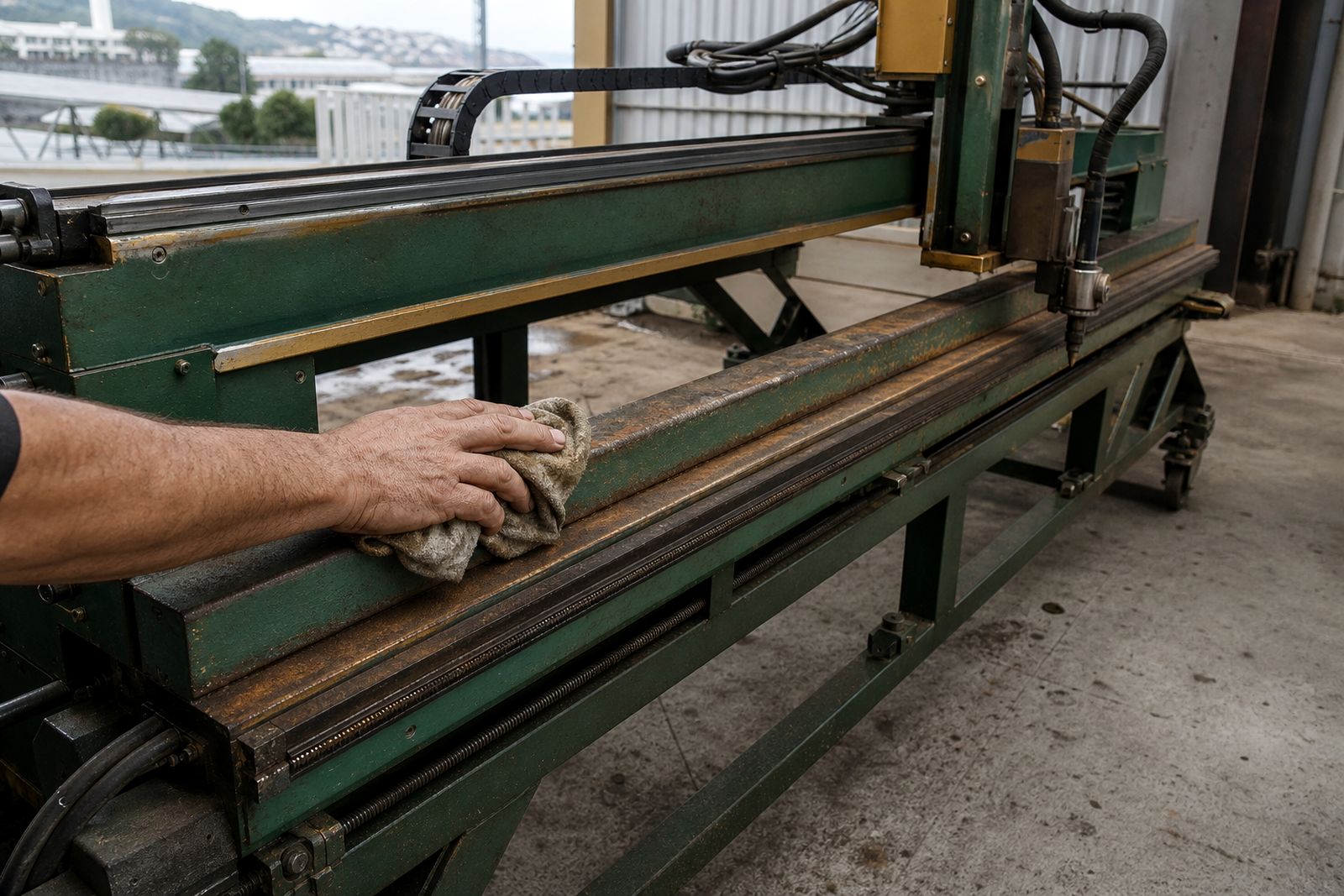
People often picture coastal corrosion as a problem for shops right on the beachfront, but Durban moisture does not stay there. Air carrying fine salt moves inland, and on older tables it settles on bare steel, painted frames with chips in the coating, linear rails, rack teeth, cable chains and control enclosures. If a machine then stands unused for a spell, the film of damp on metal parts stays longer than it would in a drier inland town.
That matters because a plasma table has many exposed working surfaces. A little orange bloom on a frame is one thing. Pitting on a rail, corrosion on a rack, seized bearings or green build-up in terminals is another matter entirely. On a neglected table the damage is rarely in one neat area, it tends to turn up in several places at once.
- Rails can pit and lose their smooth running surface.
- Rack and pinion teeth can rust, leading to rough travel and backlash.
- Fasteners can bind, making adjustment difficult during service work.
- Enclosure terminals and plugs can oxidise, causing intermittent faults.
- Fans can pull damp, dirty air through drives and power components.
Where old tables usually show the first signs
On pre-owned machines from the Durban side, we usually start low down and work upward. Water trays, slat beds and lower frame sections tell their own story. If the tray has leaked, overflowed or held dirty water for too long, the underside of the table often shows rust scale, swollen paint and old repairs. From there we move to the motion parts, because the cutting quality depends on them more than fresh paint ever will.
The first signs often show up in small changes. A machine may jog across the bed and still look passable, yet the carriage can feel slightly gritty, one side can drag more than the other, or the gantry can settle unevenly after a stop. Those are the kind of clues that tell you the table has lived in damp conditions and has not been maintained closely enough.
Even without a major flood event, moisture can still cause trouble. It can sit in a cabinet, condense on cooler mornings and slowly affect contacts, relays and boards. That is when operators start reporting odd faults that appear and disappear, which is a frustrating pattern in any busy workshop.
A workshop example from KwaZulu-Natal
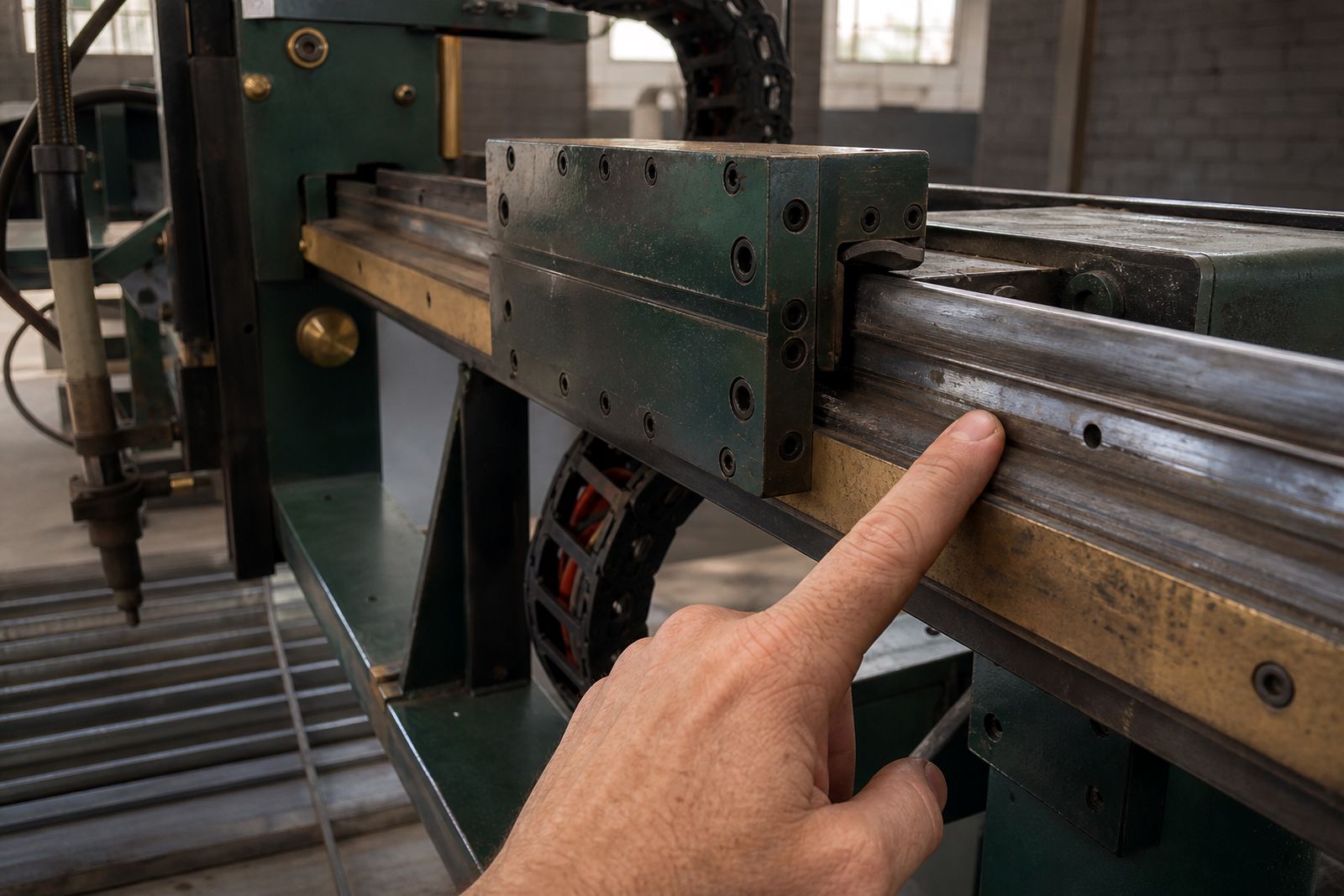
One machine we handled had spent years in a fabrication shop not far from the coast with one side facing a large roller door. The table still cut plate, but the owner had noticed that parts at one end of the bed needed more dressing than before. During inspection, the rail on the exposed side showed light pitting and the rack had visible corrosion on several sections. Inside the electrical cabinet there was residue around a few terminals and a cooling fan with heavy dust stuck to damp grime.
In that case the machine was still worth saving, but only after honest assessment. The frame was sound, the motion could be corrected and the controls were serviceable after cleaning, testing and a few replacements. Had it stood another season in the same condition, the cost would have climbed sharply. That is often the turning point with old tables near the coast: early attention keeps the job practical, while delay turns minor deterioration into parts replacement across the machine.
What we check before a table goes up for sale
With coastal machines, the inspection covers more than basic power-up and movement. We check the bed structure, gantry travel, rail condition, backlash, torch motion, cabinet cleanliness and the state of plugs, switches and cable runs. We also look for signs of old water leaks, improvised earth connections and corrosion hidden under covers. If a table has had a hard life, the report needs to say so plainly.
Where work is needed, we deal with the mechanical issues first because there is little point in chasing fine cut quality on a machine with worn travel surfaces. After that we test the control side, run motion checks and produce a test-cut sample that shows how the table is behaving under actual cutting conditions.
- Rail surfaces are cleaned and checked for pitting, scoring and straightness.
- Bearing blocks, wheels and pinions are inspected for wear and rough running.
- Cable tracks and looms are checked for brittle insulation and corrosion at terminations.
- Cabinets are opened for signs of damp residue, dust build-up and heat damage.
- Frame sections around the tray and slat supports are checked for thinning or patch repairs.
- Limit switches, earthing points and moving connections are tested under use.
How we deal with Durban humidity on refurbished stock
Refurbishment on a coastal table focuses on condition, protection and reliable running. If corrosion is only surface deep, affected areas can be cleaned back, treated and protected, while motion parts are serviced or replaced where needed. If rails or racks are too far gone, they need proper replacement with no hopeful clean-up. The same goes for enclosure fans, damaged wiring and terminals that have already started failing under load.
Storage matters too. A machine waiting indoors with less exposure to damp air will hold its condition far better than one parked where night moisture settles on the frame. We try to keep tables dry, covered where appropriate and clean of conductive dust. It sounds basic, but a clean cabinet and dry motion system go a long way in KwaZulu-Natal.
We are also careful not to oversell a tired table. Some machines are better suited to a sold-as-seen buyer who understands the work ahead. Others justify refurbishment because the frame, gantry and control platform are worth preserving. The decision comes from the machine's actual condition and the work required.
Practical advice if you are buying near the coast
If you are considering an older plasma table from Durban or any humid coastal area, ask for clear photos of rails, racks, the tray, underside frame sections and the electrical cabinet interior. A general outside photo tells you very little. You want to know where the rust is, how far it has spread and whether the machine has been standing idle in damp air.
It also helps to think about the machine's next home. A decent table moved to Newcastle or inland parts of Gauteng may stabilise once cleaned and maintained properly, while the same machine left in a damp coastal workshop can keep deteriorating. Location changes the maintenance burden quite a bit, even though storage and upkeep still matter.
- Ask to see an inspection report with more weight than verbal assurances.
- Ask for a current test-cut sample from the machine in its present setup.
- Check whether the table has lived under a leaking roof or near an open door.
- Inspect cabinet interiors for oxidation, dirt build-up and amateur wiring changes.
- Budget for slats, bearings or rail work if corrosion is already visible.
If you need a machine moved from the coast to another town, the relocation side matters as well. A careful strip, transport plan and recommissioning check can prevent small existing issues from becoming bigger ones on arrival. That part gets missed quite often and then the buyer blames the machine when the real problem was poor handling.
Questions we get asked
Does surface rust always mean a table is a bad buy?
Light surface rust on non-critical areas can be manageable. The bigger concern is pitting on rails, wear in drive parts, corrosion inside the cabinet and structural loss around the tray and bed.
Are Durban machines always worse than inland machines?
Not always. Condition depends on storage, cleaning, use and maintenance. A well-kept coastal machine can be better than a neglected inland one, but humidity does raise the risk on older tables.
Can you move a used plasma table from KwaZulu-Natal to another province?
We relocate and recommission machines from Durban and the rest of KwaZulu-Natal to workshops across South Africa, with checks before and after the move.
Also worth a look
Tell us about the job
Send sizes, materials and where you are through our contact form, and we will come back with the practical options.
Open the contact form