

Refurbished machines
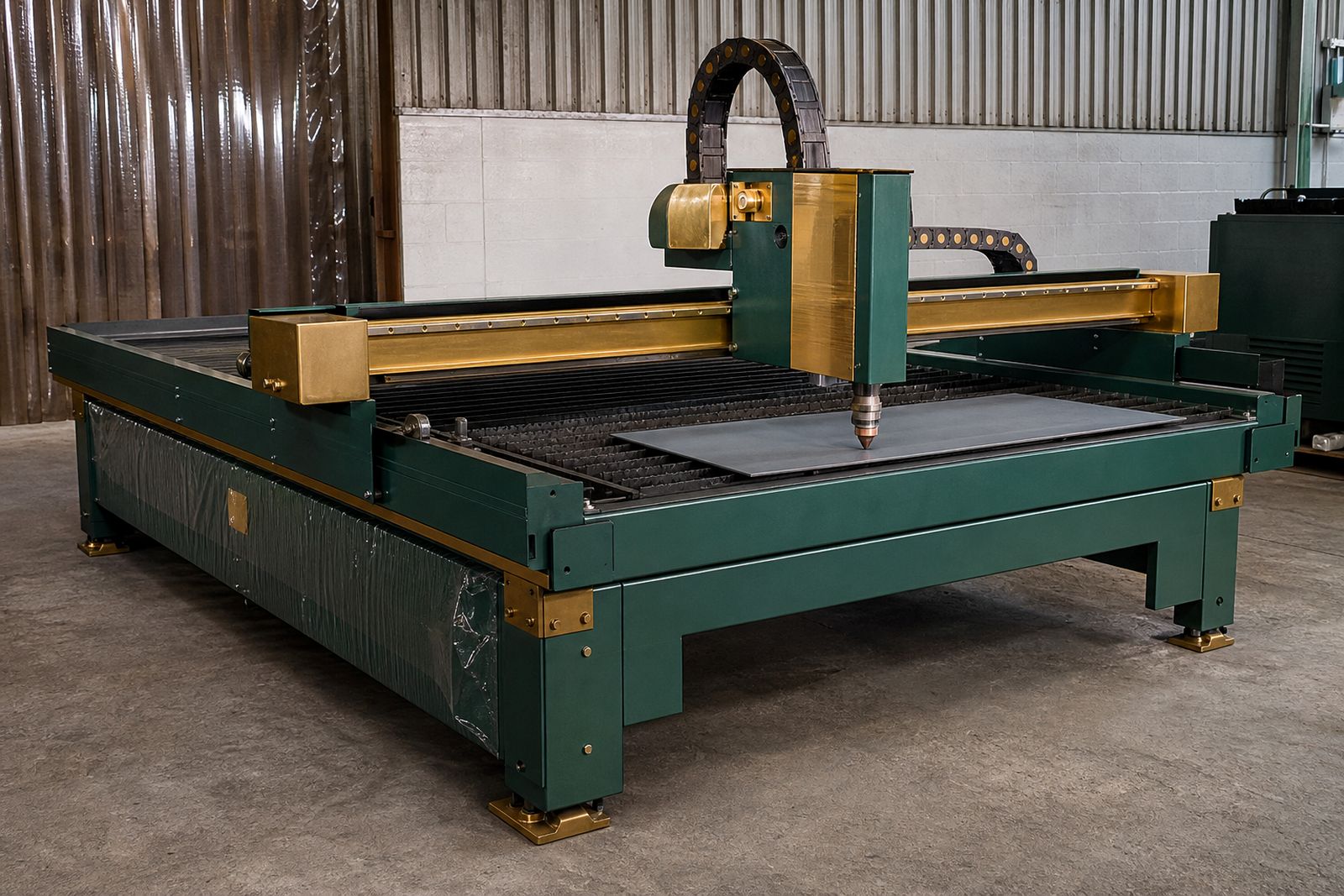
Our refurbished CNC plasma machines are stripped down, rebuilt where needed and repainted before they go out to a workshop. Each one is sold with an inspection report, a test-cut sample and warranty so you can review the condition on paper as well as in photos.
What counts as refurbished here
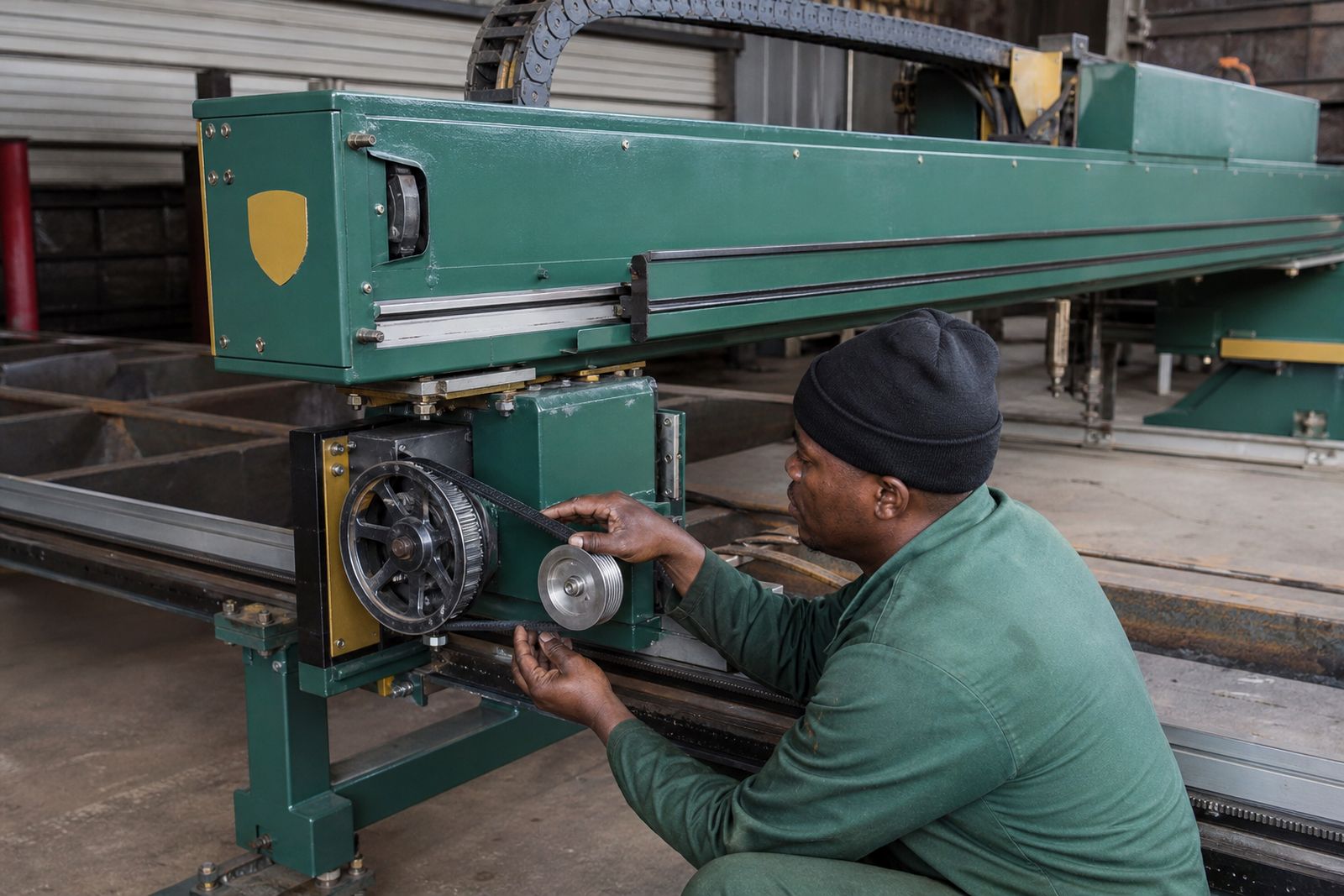
A refurbished machine has been cleaned, checked and prepared for work. We take selected units far enough apart to check the frame, rails, drive parts, cable carriers, height control and electrical cabinet, then replace worn items where the machine needs it. Corrosion is dealt with, damaged covers are repaired, and the machine is repainted before final testing. Some machines arrive from local workshops in Pinetown or Pietermaritzburg, while others are brought in through trade-ins and workshop closures.
The aim is to return an older plasma machine to steady day-to-day work for fabrication, maintenance and small batch cutting. That suits buyers who want a stronger starting point than a sold-as-seen machine, while still avoiding a new build. We do not sell new consumables lines, and we do not build new machines.
- Mechanical inspection after strip-down
- Replacement of wear items where required
- Repainted frame and covers
- Motion and cut testing before dispatch
- Inspection report and sample cut included
Table sizes, gantry travel and practical limits
Refurbished stock changes, so exact sizes depend on what is in the shop at the time. Most machines we handle fall into the common workshop range, from compact tables suited to light fabrication up to larger beds used for plate nesting and repeat part cutting. We list the usable cutting area alongside the outside frame size, because that is what matters when you are loading plate.
As a guide, you will usually see working widths from about 1 250 mm to 2 000 mm and working lengths from about 2 500 mm to 6 000 mm. Heavier tables may carry thicker plate more comfortably, while lighter machines are often the better fit for small premises with narrow access. Torch height control, slat bed condition and rail straightness make a big difference to cut consistency on an older machine, so those points are checked closely.
- Typical cutting widths: 1 250 mm, 1 500 mm, 2 000 mm
- Typical cutting lengths: 2 500 mm, 3 000 mm, 6 000 mm
- Usable plate thickness depends on the power source fitted
- Repeatability is affected by rail condition, backlash and height control setup
- Bed and frame weight increase notably on longer tables
If you need very high production output, fine-detail work across long shifts, or support for unusual automation, a refurbished machine may not be the right route. For general steelwork, brackets, flanges, base plates and repair work, it often makes good financial sense.
Workshops where these machines fit properly
Refurbished units suit workshops that already understand plate handling and basic machine care. They are commonly placed in fabrication shops around Durban, engineering yards near Richards Bay, and maintenance departments in inland areas where replacing a whole cutting setup is hard to justify. A machine like this can handle routine plate work well if the table size matches the parts you cut and the machine is installed on a sensible floor.
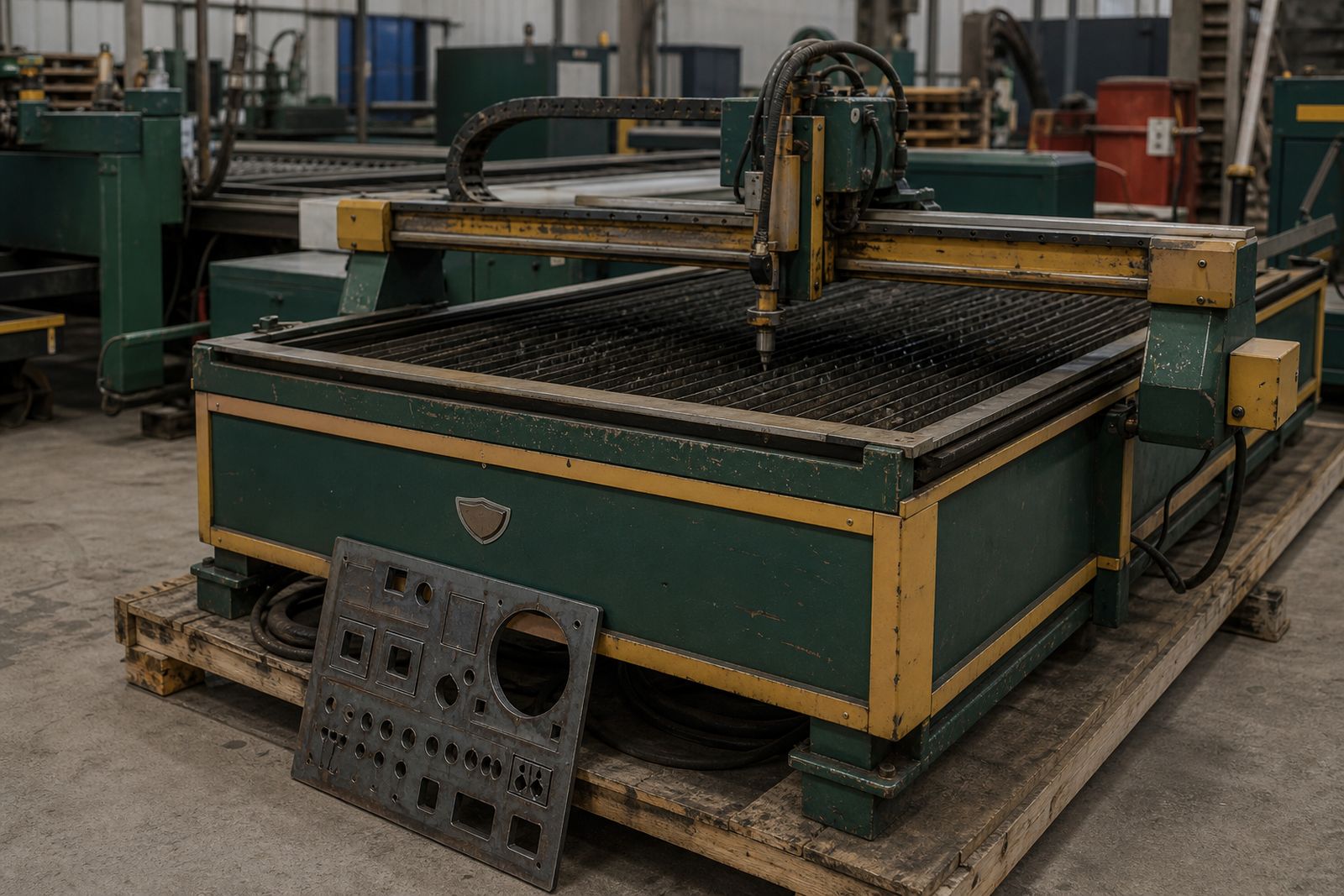
They are less suited to buyers who need cosmetic perfection, very quiet operation from every moving part, or the latest control features. On an older platform you may see small layout differences in cable routing, guard panels or operator screens between one machine and the next. That is normal. The point is working condition and known limits, not showroom uniformity.
Coastal humidity matters in Durban. Even after refurbishment, steel slats, exposed fasteners and untreated plate residue need regular attention or surface rust will start quickly, sometimes quicker than people expect.
Power, floor space and site conditions
Before delivery we need to know where the machine is going, how it will get inside and what services are available at the final position. Plasma equipment relies on stable mains power and clean compressed air. If a workshop has frequent electrical interruptions, voltage swings or an undersized compressor, cut quality and starting reliability can suffer. Floor level also counts. A table that sits twisted on an uneven slab can give trouble with gantry movement and bed alignment.
- Tell us the door width and height at the site entrance
- State whether there is forklift access or only manual offloading space
- Confirm single-phase or three-phase supply at the machine position
- Give the compressor output and air drying arrangement
- Mention floor condition, slope and any trench or drain nearby
- Note the town if relocation or recommissioning is needed
For workshops outside Durban and KwaZulu-Natal, we can relocate and recommission machines elsewhere in South Africa where the job is practical. If a machine must go up a ramp, through a tight roller shutter or into a mezzanine level unit, say so early. That changes handling plans quite a bit.
Care after installation
A refurbished machine stays in shape only if it is kept clean and adjusted as it works. Fine dust, wet slats and neglected rails shorten the useful life of parts that were perfectly serviceable when the machine left our shop. Most owners need simple routines and consistent attention. Daily wipe-downs and regular checks matter more than occasional deep cleaning.
In coastal areas, splash from wet beds and salty air can creep onto rails, racks and fasteners, so a machine near an open roller door needs a bit more attention. Letting dross build up until slats bow and workpieces sit unevenly causes avoidable cutting faults, and operators then blame settings that are not the real issue.
- Keep rails and drive areas free of slag and plate dust
- Drain air lines and check filtration regularly
- Replace slats before they distort plate support badly
- Inspect cable carriers and torch leads for rubbing or heat damage
- Check earthing and clamp condition before production runs
Details that help us match a machine to your job
When you enquire, the most useful information is a clear picture of the work. Tell us your sheet size, usual material type, common thickness range and the largest part you need to nest. If you already have a machine and want a replacement, mention what frustrates you on the current setup. That saves time and avoids putting a table in front of you that looks right on paper but is wrong for the shop.
Please include your town, whether collection or relocation is needed, and if you want a refurbished machine only or will also consider ex-demo stock. If you need used spares from machines we break, list the part you are after as accurately as you can. Photos of the existing site are helpful too, especially where access is tight or the machine will be fitted into an older workshop with limited crane space. Send those details through our contact form and we can point you to suitable stock or upcoming refurbished units.
What our Pre-owned Plasma Machine customers say
Verified Google reviews
Questions we get asked
Are refurbished machines sold with proof of condition?
Each refurbished machine is sold with an inspection report and a test-cut sample so you can review the condition and the cut result before placement in your workshop.
Can you take our current plasma table as a trade-in?
We do take trade-ins where the machine, age, condition and transport make sense. Include photos, table size, control type and any known faults when you send the enquiry.
Do refurbished machines include new consumables?
Refurbished machines leave with the machine-side work completed and wear parts fitted where required during refurbishment. We do not sell new consumables lines.
Tell us about the job
Send sizes, materials and where you are through our contact form, and we will come back with the practical options.
Open the contact form