

Sold-as-seen machines
Sold-as-seen machines are aimed at workshops that want the lowest entry price on a running CNC plasma table and are comfortable taking on setup, wear items and follow-up work themselves. These units are checked to confirm basic operation, then sold with their condition and limits stated plainly before collection or relocation.
What sold-as-seen means on our floor
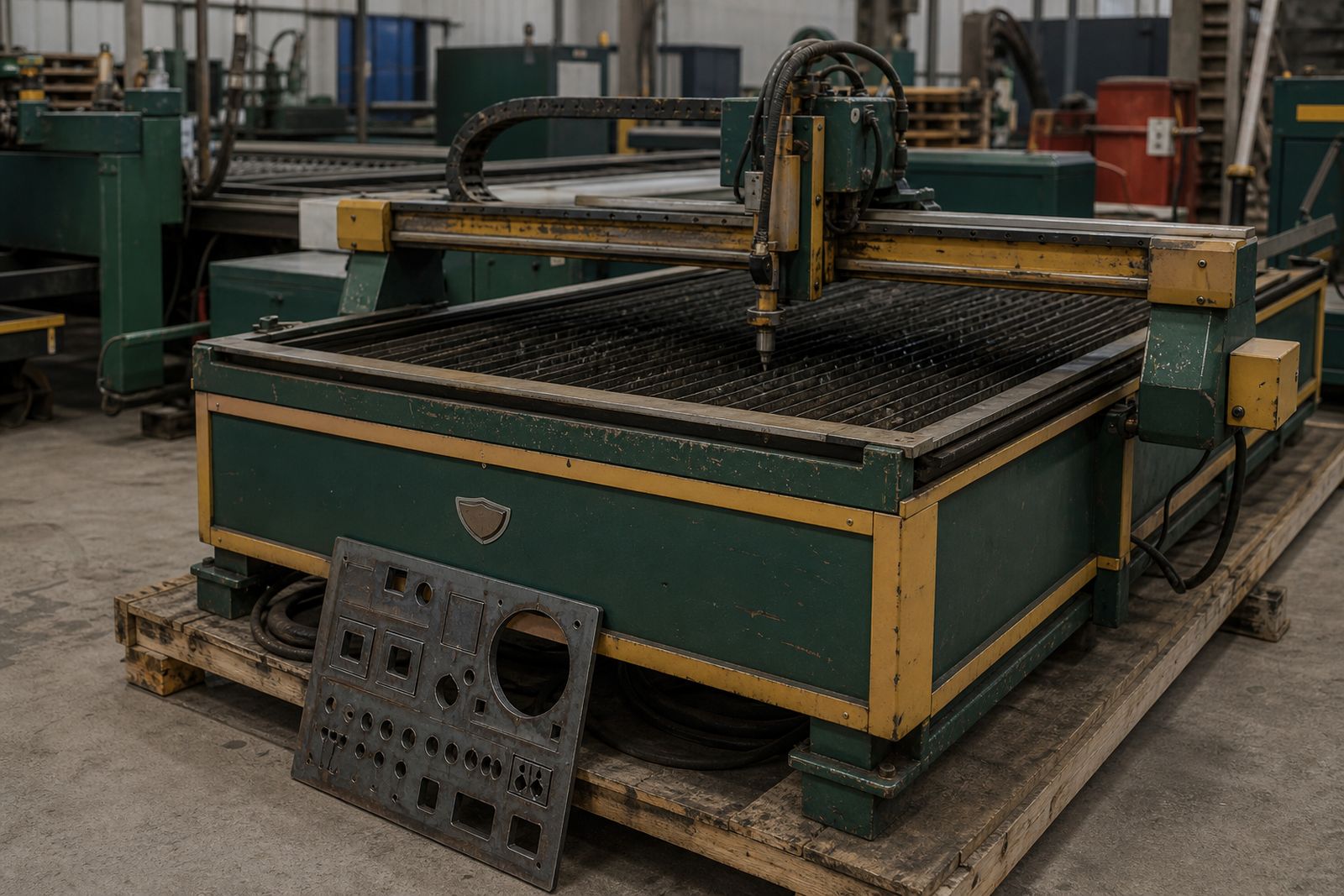
A sold-as-seen machine is a pre-owned CNC plasma unit that can be powered up and shown cutting or jogging, and it is not taken through the fuller strip, refurbishment or presentation standard used on our refurbished stock. The point is straightforward: a lower purchase price in exchange for more buyer involvement after handover. That can suit a fabrication shop with its own fitter, electrician or controls person, or a buyer who already knows the model layout and can sort the last 10 percent without drama.
We record the machine condition as honestly as we can from the inspection in front of us. That may include cosmetic corrosion, worn cable carriers, older control hardware, surface rust on the bed, torch height control faults, missing covers or a table that cuts well but needs levelling on site. If a function is untested because a linked item is missing, we state that too. There is no dressed-up language here, just what the machine is and what it still needs.
- Basic running proof before sale
- Lower price than refurbished or ex-demo stock
- Condition notes on visible faults and known gaps
- Best suited to buyers with workshop support on hand
Typical sizes, power and working limits
Stock changes, but sold-as-seen machines in this category are usually sheet-cutting tables for mild steel fabrication, repair work, gates, brackets, flanges and general profile parts. Common table footprints range from compact 1 500 x 3 000 mm beds through to 2 000 x 4 000 mm and 2 000 x 6 000 mm layouts. Some arrive with extraction trays or water beds, while others are sold with only the core frame, gantry and controls.
Working limits depend on the torch system fitted, the motion condition and the state of the slats and bed. On older tables, practical accuracy can vary across the sheet if rails are worn or the frame has taken knocks in transport. A machine may still be useful for many workshop jobs, though it may not suit fine decorative nesting or repetitive production where every hole and tab must match first time. That distinction matters more than the brochure size did when the table was new.
- Typical bed sizes: 1 500 x 3 000 mm, 2 000 x 4 000 mm, 2 000 x 6 000 mm
- Usually 380V to 415V three-phase supply for the table and extraction equipment
- Control age varies from basic keypad systems to PC-based control screens
- Cutting range depends on torch package, motion health and air quality on site
Where these machines fit well, and where they do not
Sold-as-seen units usually fit workshops in Durban, Pinetown and Pietermaritzburg that need a functional table without paying for a full cosmetic and mechanical rework. They also make sense in Richards Bay and Newcastle where a buyer already has technical staff and wants to place the machine into a line with their own preferred air prep, extraction and software routine. If your team can true a rail, replace sensors, clean earth paths and sort torch consumable alignment, this route can save money.
They are less suited to first-time CNC owners, jobbing shops without technical backup, or sites where downtime causes immediate contract penalties. Coastal humidity can be hard on older electronics and untreated steelwork, so a table going into a salty air environment near the Durban coast needs realistic expectations and regular care from day one. Sold-as-seen units suit buyers who are comfortable with remedial attention after delivery and place less weight on cosmetic presentation.
- Good for experienced fabrication teams
- Useful for backup capacity or secondary cutting work
- Suitable where in-house maintenance is normal
- Not ideal for buyers needing a near-turnkey installation
Site requirements before collection or relocation
Before a machine leaves our Durban base, the buyer should know the floor area, access route and electrical supply at the receiving workshop. Allow room for loading sheets, removing parts, accessing the control side and servicing the drive components. Long beds need clear forklift movement along the machine, and some older units are awkward to split for transport if they were assembled heavily or modified over time.
Most machines in this bracket need a stable concrete floor and proper three-phase power. Air supply quality matters as much as electrical supply, because wet or oily air leads to poor cuts and wasted consumables. If the unit has extraction, you must also allow for duct routing and fan placement where municipal and landlord rules apply. On some moves we see workshops underestimate ceiling height at the door or forget about the turning radius for a rigid truck, then the whole plan gets messy fast.
- Confirmed floor space with operator clearance around the table
- Three-phase supply matched to the installed equipment
- Dry compressed air at the pressure required by the torch package
- Access for offloading, rigging and bed section movement
- Extraction or water table plan suited to your premises
Care after handover
Older plasma tables reward basic housekeeping. Keep rails clean, remove spatter build-up, inspect torch leads for heat damage and do not let the slat bed rust into one solid plate. In coastal KwaZulu-Natal this matters even more because fine salt and damp air work into exposed steel, bearings and electrical terminals faster than inland buyers sometimes expect. A simple wipe-down routine and sensible cover arrangement when the machine is idle can save a lot of frustration.
Grounding should be checked properly after relocation, especially if the table is installed in a busy shop with welding sets nearby. Loose earth connections, poor air filtration and neglected cable strain relief are common causes of rough running on older machines. Keep the control enclosure clean, inspect drive couplings and recheck gantry squareness after the first production runs. It sounds basic, but on sold-as-seen equipment these small jobs are often what separate a decent buy from an expensive headache.
What to include with your enquiry
If you are looking at a sold-as-seen machine, tell us enough about your workshop for a realistic match. The useful details are the sheet sizes you cut most often, the material thickness range, your available power, whether the machine will stay in KwaZulu-Natal or be moved further inland, and whether you need collection only or relocation and recommissioning. If you already have a plasma power source or compressor on site say so, as that can affect whether a particular table is suitable.
Please also note whether your team will handle installation and fault-finding in-house, or whether you want us to quote separately on moving and recommissioning. If access is tight, mention roller shutter height, forklift capacity and whether the machine must pass through a narrow yard or shared industrial park. Clear information at the start helps avoid a mismatch between the bargain on paper and the reality in your shop floor.
- Preferred bed size and maximum sheet length
- Main materials and usual thicknesses
- Workshop location and whether relocation is needed
- Power supply and compressed air available on site
- Your maintenance capability for setup and remedial work
You can send those details through our contact form and we will point you to the stock that fits this lower-price route best.
What our Pre-owned Plasma Machine customers say
Verified Google reviews
Questions we get asked
Do sold-as-seen machines include an inspection report, test cut and warranty?
Sold-as-seen machines in this lower-price category come with narrower inclusions than stock sold with the full inspection report, test-cut sample and warranty package. We state the condition and what was demonstrated on the machine before sale, and any wider scope must be agreed for that specific unit.
Can you relocate a sold-as-seen machine to another town?
We relocate machines within Durban and KwaZulu-Natal, and to and from the rest of South Africa. The move can include loading, transport, positioning and recommissioning where required, depending on access, bed size and site conditions.
Are sold-as-seen machines suitable for a first CNC plasma purchase?
Usually only if the buyer has solid technical backup. If your workshop needs a machine with fewer unknowns and less post-installation work, one of the refurbished or ex-demo options is often the better fit.
Tell us about the job
Send sizes, materials and where you are through our contact form, and we will come back with the practical options.
Open the contact form